Author name: Anil Bankoti

AI powered mobile camera
Tech Buzz

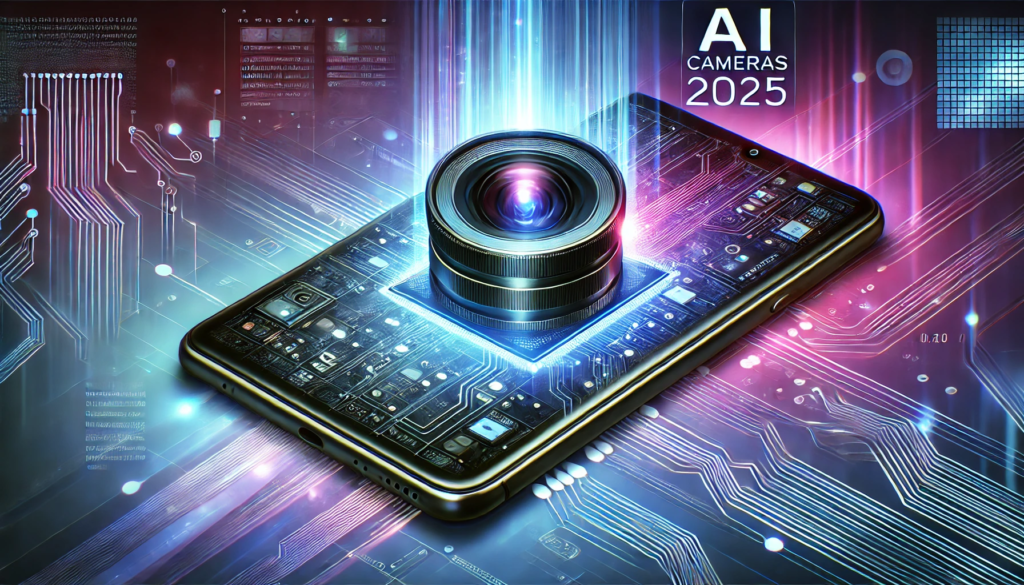
AI Powered Mobile Cameras 2025: Redefining Photography

Mobile phones especially smart phones are becoming an integral part of our lives. Integration of AI technology in mobile phones is increasing its capabilities manifold. Mobile phone cameras are also becoming smarter due to the integration of AI technology. Mobile phones are always with you, so using them you can do photography and videography whenever and wherever you want. Photography and videography is comparatively easier with a mobile camera than with a DSLR camera. They are small in size and capable of taking pictures quickly. Your smartphone is a multi-purpose device that lets you capture, edit and share media quickly. Currently, there is a quality gap between the media output of mobile phone cameras and larger DSLR cameras, which AI is attempting to bridge. The importance of AI powered mobile cameras is increasing with time in the mobile phone industry. Lenses and sensors play an important role in photography and videography. With cameras having better lenses and sensors, excellent images can be clicked and mesmerizing videos can be made. Apart from hardware, media editing software is also an important part of this process. Due to their form factor, it is difficult to fit large lenses and sensors in portable devices such as mobile phones. However, nowadays lenses and sensors have also become quite compact, with the help of which mobile cameras are also capable of generating good media. But they also have their limits and cost is also a factor in mobile cameras. The development of artificial intelligence (AI) and machine learning technology is proving to be a boon for mobile phones. Currently, DSLR quality videos and photos are being taken with AI powered mobile cameras. The powerful AI powered camera in mobile phones is doing wonders with the help of cutting edge technologies like AI, ML and deep learning. AI powered mobile camera provides excellent results by merging the capabilities of hardware and media editing software to optimize the scene. With AI powered mobile cameras you can take sharp photos in low light, remove unwanted objects from the image, unblur faces, and take the best group photos. The AI powered camera relies on specialized software to allow users to capture images that were previously only possible with high-end cameras. AI camera can help in capturing the best media by identifying the objects present in the scene and changing the camera settings as per requirement. AI models are usually trained using large datasets. Additionally, AI also tries to adapt itself to user interactions. Because, it has the ability to learn from datasets as well as from user feedback and usage patterns. It compares elements of the scene with these huge datasets and can identify faces, objects, landscapes, sunrise, sunset and much more. After detection, the AI powered mobile camera makes real-time adjustments to camera settings as needed for scene optimization. With the help of AI, focus, exposure, colors, noise etc. can be optimized. Focusing is an important aspect during photography and videography, which can be significantly improved with the use of AI algorithms. It allows precise autofocus, capturing sharp and clear subjects. The movement of the subject often results in blurry photos. The AI camera system uses advanced machine learning to prevent details loss in image and blurring due to the movement. AI powered object tracking can maintain focus on moving subjects. Due to which the problems faced while capturing moving objects can also be reduced. Making an image or video beautiful requires taking into account the different brightness levels in the foreground, subject, and background, which the AI ​​camera senses and automatically sets the proper exposure for each area as needed. The HDR mode on the AI ​​camera allows a wider dynamic range to be captured by automatically combining multiple shots taken with different exposures. With this technology, even photos taken in very low light appear bright, clear and detailed. The AI powered mobile ​​camera also has the ability to automatically combine photos with multiple subjects, exposures, and angles into one stunning photo to create the perfect group photo where everyone is on focus. The exposure challenges of taking photos in low-light conditions and high-contrast situations can also be corrected with the AI ​​camera. Achieving real tone with mobile phone cameras is a long-standing problem that can be solved by AI software. This software adjusts exposure, color balance and lighting to achieve the desired result. Mobile phone cameras can also capture stunning portrait photos through AI algorithms. It can apply a beautiful blurred effect to the background by putting more focus on the subject. Therefore, it can be said that it is capable of imitating the Bokeh effect of DSLR cameras and has the ability to create attractive photos. If you are not satisfied with the scene after the photo is taken, you can further optimize the scene with the help of AI. It can help you adjust the lighting for the scene and add details to the photo or improve the quality of the photo. It can also suggest edits or do it automatically if cropping is needed to better structure the photo. Whenever you go on a trip, you must be doing photography, but generally what happens is that the person who takes the photo is not present in the image. Google Pixel 9 phone has solved this problem through Add me feature. The new Google AI editing feature lets the person taking the photo join the picture. You may have recently seen an advertisement for a Samsung Galaxy mobile phone in which, as claimed, the Moon has been photographed with great clarity. This mobile from Samsung relies on AI to capture telescope-quality photos. The camera system uses deep learning-based AI with multi-frame processing to enhance details in the image when you zoom-in. Oppo is also using AI Telescope Zoom in its mobile devices. Many times, unwanted things get recorded in photos and videos which spoil their beauty. With the AI powered mobile cameras you can remove everything you don’t want from the final photo with

Game-Changing AI Agent for Browsers
Tech News

Google’s Powerful AI Agent for Browsers in 2025

Google is reportedly working on a new AI tool, or, we can say, an AI agent for browsers, in a project codenamed ‘Project Jarvis‘ that will help automate everyday tasks on the web. This is going to revolutionize the way people browse the web. In this, it is possible to use a refined and advanced version of Google’s Gemini AI model. This version of Google Gemini will be specifically tuned for the Chrome browser, so chances are it will only work with the said web browser. This improved version of Gemini in Project Jarvis will be far more capable of understanding and writing text like a human. Reportedly, Jarvis will attempt to automate tasks that users routinely perform while browsing by analyzing a user’s web browsing habits in real-time. It would work by taking continuous screenshots of the user’s screen and analyzing those images. This AI agent for chrome browser will be able to understand and interpret instructions given by the user on visited web pages and perform actions for the user, such as clicking buttons or typing text. These are some of the possibilities that are being reported; its complete overview and full potential will be known only after its launch. According to some media reports, there is a possibility that Google may showcase this tool by December 2024. Google may initially test this tool with a limited number of users to make it bug-free. Apart from Google, there are many other tech giants who are working on similar technology. Prominent among them are anthropic Claude, Apple, Microsoft, and OpenAI. The deep integration of AI into web browsing may raise several privacy concerns. It will be interesting to see how the tech giants will resolve these concerns.

AI-Powered Wearables for Health and Fitness
Tech Buzz

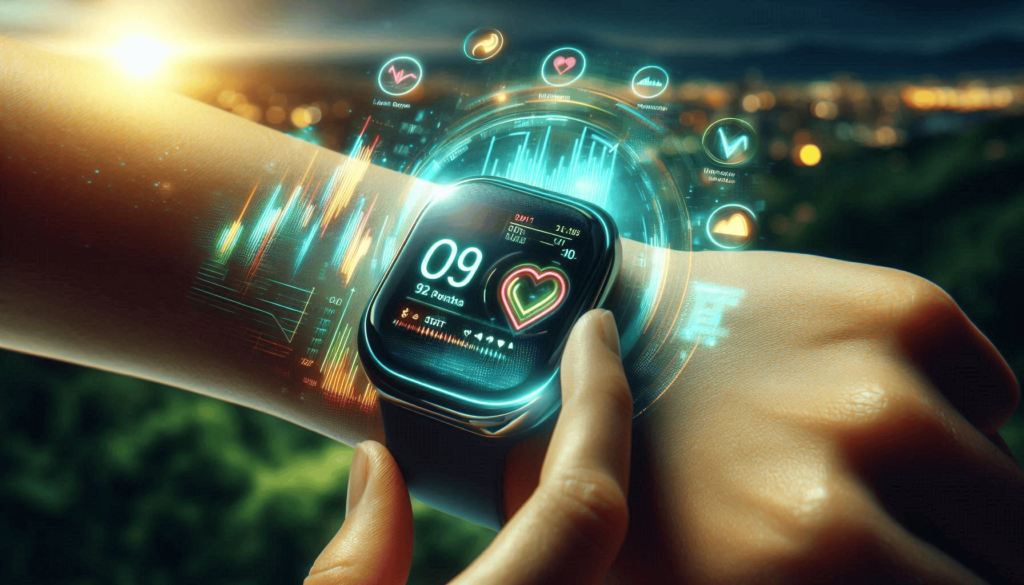
5 Remarkable Benefits of AI-Powered Wearables for Health and Fitness in 2024

With the emergence of AI in recent years, wearable technology has emerged as an important trend. This revolutionary technology has changed the way we interact with and use devices in our daily lives. From fitness trackers to smartwatches and beyond, these innovative gadgets have evolved rapidly. Which have provided better functionality and integration into various aspects of our lifestyle. Although the concept of wearable technology is several decades old, it has become better with the growth of AI. Driven by the advancement of AI chips in 2024, we are likely to see significant technological innovation in the smart AI-powered wearable industry. Currently, the production and use of AI-powered wearable devices are at an all-time high as AI has improved its operational efficiency, and prices have also decreased. In this blog post, we will discuss the top 10 ways AI-powered wearables are changing health and fitness. Real-Time Health Monitoring Continuous monitoring of health and fitness has become possible through AI-powered health-tracking devices. AI-powered wearables can continuously monitor vital signs like heart rate, blood pressure, blood oxygen levels, sleep patterns, and activity levels. AI-powered wearable devices can prove to be a boon for patients who require constant observation. These devices are capable of providing real-time updates and interventions. Wearable devices and sensors equipped with AI technology continuously collect and monitor data in real-time, which helps AI algorithms to predict deviations in health parameters. Continuous monitoring may alert person to possible health concerns like heart attacks, which can be life-saving in an emergency. Some sophisticated AI tools can monitor a patient’s health progress in real-time, allowing adjustments to base treatment plans as needed. Mention new AI features that enhance the accuracy and reliability of health insights. Devices like the Apple Watch and Fitbit help users make informed decisions about their health, fitness and wellness routines. These devices use machine learning algorithms to analyze health data. Personalized Fitness Plans Personal health and fitness tracking has become increasingly popular in recent years. There is a huge availability of AI-powered wearable devices in the market to monitor various health and fitness levels. People have become aware of them and the number of people using them has also increased. These tools can help users track their progress, set goals, and receive personalized feedback on their fitness performance, as well as provide customized recommendations based on their fitness goals and performance. An example of an AI-powered wearable device that offers personal fitness tracking is the Fitbit Versa. In the fitness and wellness industry, AI-powered wearable devices are gaining popularity, mostly due to advanced data analytics, machine learning, and real-time monitoring capabilities. These gadgets may recommend personalized workout plans depending on a person’s age, weight, fitness level, and personal objectives. These AI-powered fitness apps work like virtual personal trainers by suggesting necessary changes to workout plans based on user feedback and performance data. Some of the AI-powered applications can offer customized dietary recommendations and nutrition plans. To do this, they keep an eye on a person’s dietary preferences, health and fitness objectives, and nutritional needs. During exercises, AI-powered wearables, particularly when linked with an AI app, can give quick feedback on posture, speed, and technique. This quick feedback is comparable to having a personal trainer who ensures that the workouts are performed correctly. This lowers the danger of injury while increasing the efficacy of the workout. Mental Health Tracking According to a World Health Organization estimate, one out of every eight persons worldwide suffers from a mental disorder. Stress can be a major factor behind many mental illnesses. Most people with this disease control their mental illness with medication, counselling, or both. Technology can help people avoid or escape from this cycle of mental illness. Currently, several AI-powered wearable gadgets have been developed to deal with mental health issues. These AI-powered devices can assist with not only mental health issues, but also sleep deprivation, rage, and impatience. These wearable gadgets take the shape of wristbands, headgear, and smartphone applications. These assist users in managing the mental and emotional symptoms of stress and anxiety using different techniques. These wearable gadgets detect signals from the brain and body and deliver feedback to the user to help manage symptoms. These devices have also been found beneficial in monitoring sleep patterns and managing them based on the feedback provided by the device. The gadget may also offer feedback to alleviate stress by understanding the reasons for it based on sleep patterns. These AI-powered gadgets are also beneficial to healthcare providers and doctors since they allow them to better treat their patients depending on the data they collect. These gadgets are self-help tools that assist people in combating mental illnesses and empower them to take steps to improve themselves. As AI technology continues to develop, these tools will become even more advanced which will be beneficial to users and health care professionals alike. AI apps for mental health offer a range of features and services such as cognitive training, meditation practice, chat-based therapy, etc. Examples include apps like Meru Health, Ginger, Woebot, Wysa, Headspace, and gadgets such as Apollo Neuro, FloVR, Fitbit, and Oura Ring. Ergonomics and Posture Correction Ergonomics refers to those practices by which efforts are made to increase the productivity of employees as well as reduce health-related problems. This includes making workplaces safe, convenient and comfortable, designing better products and systems, etc. The use of AI in ergonomic design can provide a data-driven approach that will be able to assess human factors, work demands, and environmental conditions. AI-powered systems can be used to reduce musculoskeletal disorders in workers. Poor posture is an often overlooked threat to workers’ health and productivity in the workplace. These systems can identify risky postures and activities by analyzing video footage of workers in real-time. Wearable devices equipped with sensors and AI algorithms can be used to make the workplace even safer. These devices can provide workers with immediate feedback on activities that could potentially injure them. Workers in factories are engaged in repetitive tasks. AI-powered ergonomics

Quantum Computing
Tech Buzz

Powerful Impacts of Quantum Computing on India’s Tech Future

Quantum computing (QC) is a rapidly evolving cutting-edge technology. It has the ability to significantly accelerate computation speeds. In late 2019, Google claimed that its Sycamore quantum computer solved an extremely complicated problem in just 200 seconds. However, if the same problem were solved with today’s fastest supercomputer, it would have taken 10000 years. This gives you an idea of how quick quantum computers can be. This exponentially fast processing capacity of quantum computers is made feasible by important quantum mechanics principles such as superposition and quantum entanglement. As we all know, particles exhibit distinct behavior at the atomic level, which endows them with unique characteristics. These characteristics can be used in digital processing. In classical computing, data processing is done through logical operations, which are represented in the form of 0s and 1s. These are called bits. In quantum computing, we have subatomic particles called quantum bits, or qubits. These qubits are responsible to perform logical operations in QC. The magic lies here because quantum mechanical principles explain that qubits can be found in many states simultaneously. This property of qubits allows quantum computers to solve general calculations as well as very complex calculations easily and very quickly. Besides, it is also capable of solving many problems simultaneously, which is not possible through classical computing. This makes it an excellent choice for solving problems that would otherwise take years to solve using existing technology. Applications of quantum computing include simulating molecular structures, scanning vast datasets, and optimizing complicated systems-areas where traditional computing is having difficulty. It has the capability to propose such solutions to complex problems that will astound anyone and significantly change our present perceptions of science and technology. It has the potential to revolutionize a number of industries, including machine learning, artificial intelligence, cryptography, and drug discovery. The sheer speed and efficiency of quantum computers constitute a big step forward, attracting a lot of attention and investment. Globally, governments of many countries are arranging resources for the rapid development of quantum computing. Additionally, major technology companies, including IBM, Google, and Microsoft, are collaborating with several academic institutions to develop the hardware and software needed for quantum computing. The Government of India has also taken several initiatives to encourage research, establish infrastructure and nurture talent in quantum computing, enabling the country to compete on the world stage. It is obvious that QC has enormous potential to impact the future of technology in India and beyond. Why Quantum Computing Matters for India India has established its dominance in the fields of information technology, software development, and digital innovation across the world. India is seeing remarkable growth in its IT industry. In addition, the number of startups in our country is continuously expanding. In this digital era, India has made major technological advances. The quality of our technical education is acknowledged globally. To retain its pace, India must leverage upcoming technologies such as quantum computing. India is home to talented scientists, engineers, and tech entrepreneurs. Indian technologists, scientists, and engineers are providing their services in countries all over the world, not only providing services but also occupying high positions in big companies. A great number of Indian scientists are demonstrating their expertise in famous laboratories throughout the world. In the area of innovation, Indian businesses are likewise in the forefront. To develop indigenous technologies, various innovation and research activities are taking place in India. All this is vital to accelerate economic growth and further improve India’s position on the global stage. To keep pace with the world, it is very important to have a hold on the rapidly developing technologies. Since India’s IT infrastructure is very good, India can make significant progress in the field of quantum computing. This cutting-edge technology has the potential to bring revolutionary changes in the fields of information technology, healthcare, finance, and defense. India can improve its technical landscape by implementing this technology. It can also provide a competitive advantage in the global technology business. Quantum Computing: Key Beneficiary Sectors With the development of quantum computing, revolutionary changes will be seen in various industries around the world. This technology can contribute significantly to strengthening the economic growth of a country. This powerful technology has the potential to transform many sectors. The list of businesses that can benefit from quantum computing is long. Let’s talk about some of the major sectors in India that can benefit from quantum computing: Healthcare and Pharmaceuticals The new drug and vaccine development process can be accelerated using quantum computers. It can speed up the simulation process of molecular structures at the atomic level, enabling faster drug discovery. It will considerably shorten the time required to predict protein 3D structure and genome sequencing. This might be useful for monitoring disease outbreaks. Life-threatening diseases like cancer and rapidly developing genetic abnormalities can be avoided. Indian pharmaceutical companies can quickly develop and launch life-saving medications with the use of quantum computing. It will also be possible to provide personalized medicine and the best treatment for each individual using quantum algorithms. Agriculture A large part of the Indian population is engaged in agriculture. Therefore, we can confidently say that farmers are the backbone of the Indian economy, however, they face many issues and challenges in their work. Such challenges can be mitigated by the application of quantum computing. In fact, quantum computing could play an important role in resource allocation, crop management, and weather prediction models, among others. In this way, the use of quantum algorithms can assist farmers in making decisions such as planting, harvesting and irrigation, etc. thereby increasing production and reducing wastage of resources. Furthermore, quantum simulation can also be usefully employed to improve soil and environmental conditions, which will assist farmers in increasing their production and solving problems arising from climate change. Finance and Banking As we know, quantum computers can run complex simulations at unprecedented speed, process increasingly complex data, identify patterns and anomalies in datasets, and process complex calculations faster. Because of all these properties, the use

Scroll to Top